What are we talking about today?

I'll get back to theme days once I find a groove of posting regularly. In the meantime, most of my posts are about some variation of books, bikes, buses, or Broadway. Plus bits about writing, nonprofits, and grief from time to time.

This blog is mostly lighthearted and pretty silly. It's not about the terrible things happening in the world, but please know that I'm not ignoring those things. I just generally don't write about them here.
Showing posts with label Books. Show all posts

03 February 2019

Past vs Present

Austin has a new library. It's fantastic.
I'm in Austin this week, visiting my sister and seeing some of the beloved people and places that have helped make me who I am. It's an ongoing joke/truism in Austin that things around here change in a hurry, and not always for a better in the eyes of the locals. And while you don't have to leave for a couple years to see it--just waiting around one's own neighborhood for a few months will do--coming back to visit every six months is a fast way to muddle all the mental maps I used to have.

New pedestrian plaza on UT campus
Capital Metro, for instance. A bus system I once knew as well as the inside of my own apartment. I knew that major changes were coming--there were signs up at every bus stop when I was last here in May, plus I keep up with the Twitter chatter around transportation in Austin. But last night Denise and I were driving home from "my" HEB (which has also been rearranged, by the way) and talking about buses that are rerouted and stops that we used to use that are now gone altogether. I had no sooner said aloud, "I need to look at the CapMetro map and see what's changed," than I saw a sign for the upcoming Austin Marathon, indicating that the route is going through East Austin, a place it never went in the years I was running, volunteering, or spectating. So I added, "And I guess I need to look at the marathon map, too."
 
Places adapt and change. Kids grow up. People move away. Businesses close up shop and others open, buildings are torn down and new ones spring up. This is true everywhere, not just Austin--I've seen it happen plenty in the short time I've been in Cincinnati. And while I have my own reasons for clinging desperately to a time that is gone, the truth is that I know full well those days are never coming back again. My first Austin bus route is gone forever, the local supermarket can't serve customers who don't exist, and I'll never go back to one of my former apartments, open the door, and find Chadwick on the other side waiting for me to come home. The world is moving on and I've already gone with it, whether I like it or not.

Ai Weiwei's "Forever Bicycles" is here on a long-term
loan
. For that matter, it may be gone; I haven't been
round to look yet. It's new since I lived here and will also
be moving away again.
On the other hand, the Austin Half Marathon course has reverted to the one I ran for the first time and loved back in 2009, and while I'm not going to be here in two weeks' time to experience race day in
person, there's nothing to stop me from running some of those miles this week. Not for the sake of reliving the past, but rather to get all the joy I can out of the present.

And I hope that's what you're doing this week, too.

03 April 2018

Waitlisted. Worth It.

This is the second book I picked up at the library last week, and I'd better read it in a hurry because there's a waitlist. (And it's huge, by the way. The book, that is.)

Source.
I managed to see two different ALW shows in the past six weeks that I hadn't seen before-- School of Rock and Jesus Christ Superstar. The one I haven't seen yet but would really like to is Sunset Boulevard, but since it's closed on Broadway and I may have missed my chance for a while. 

On the other hand, Cats is coming to Cincinnati and I really enjoy that show, plus Phantom of the Opera is sitting right here in my living room, so it's not like I'm lacking ALW in my life.

And even less so once I finish reading his book.

27 March 2018

Together. Apart.

Source.
I put this book on hold at the library before Ash Wednesday, thinking it would be a good Lenten read. My turn to borrow it finally came up yesterday, with less than a week of Lent left to read it in. Oops.

I'm staring at the cover, now,* instead of reading it. For a few weeks I've been in one of those seasons when I walk through a dense fog of numbness, and while on so very many levels it's better than some of the alternatives, it means that words like Life Together jangle around in my head and can't find a place to belong. What does life together mean when you are forever apart?

I know that's not what the book is about. I don't know how familiar I'll be with the words inside until I open it up and read it, but this is a book Chadwick loved and talked about often, so I'm sure I'll meet some old friends inside. I know this isn't a book about that relationship. It's about community, and I'm nothing if not wildly enthusiastic about embracing my community. But this is something Chadwick and I shared--one reason I never read it was because he loved to tell me about it. And now I'm about to read about being together, alone.

I thank God every day for the community I have. A church family who are some of the best on the planet, coworkers who I don't understand how I'm so lucky to spend every day with. (We have some new folks who have absolutely brightened my past couple of weeks. To say nothing of the ones I already knew were bright.) I don't know how this happened, but there's a part of me that thinks that life together is already going pretty great, and I'm not sure how one little book will make it any better.

So. I'd better crack this thing open and find out. I'm sure the library still has a waitlist of other people who need it, too.

Maybe one of them is you. What's your community like?

*Unrelated tangent: there's an actor who I like, who I follow across all his public social media accounts, who has a strange relationship with commas. Sometimes it's all I can do to hold back from telling him that I'm taking all his commas away until he learns what they're for. Other times, like now, I find the urge to slip in an extra comma à la that guy too strong to resist. Sometimes it's more comforting than frustrating, so I can see why he's embraced it.

25 February 2018

To See the Face of God

Last week, I picked up A Million Miles in a Thousand Years again and have been re-reading it. You know, because when you have 1000 books on your to-read list, and 30 on the real, live to-read shelf in your living room, why wouldn't you reread something instead of trying something new?

There's probably a whole post in that last sentence, but it is not today's post.

So! Reading A Million Miles, which is all about the story we're writing with our lives, always reminds me of bishop from Les Misérables. Now there's a guy who was living a great story. His treatment in the musical version is brief but beautiful:


Now seems like a good time to say that this version, while great (Colm Wilkinson! What's not to love about that guy?), has nothing on the stage version. Ramin Karimloo as Valjean in the scene with the bishop remains one of the most powerful couple minutes of theatre I've ever seen. This is a moment that is best experienced live, and if you're very very lucky, from close enough to the stage to clearly see the actors' faces.

In rehearsal and on Broadway. I don't have the words for how incredible
Ramin was in this scene. (Adam Monley as the bishop also amazing.) The
whole plot of forgiveness and redemption really begins right here.
Image sources: Rehearsal, Broadway.
Anyway, the bishop--Monsieur Myriel--lived an amazing story, and it's that story that he invites Valjean into when they meet. My beloved Signet Classics edition of Les Misérables has 1460 pages. I don't usually recommend that people read the whole thing--it's quite a slog for the modern reader and you have to really hang in there through some completely unrelated and quite lengthy chapters--but Monsieur Myriel is the star of the first 104 pages. If you want to read about someone who used his life to write a great story, that's the part you should read.

To love another person is to see the face of God. But the better task, I think, is to choose to see the face of God when we see those standing before us. Seeing the face of God on someone else will surely call me to love that person as myself--as a human being, as a fellow traveller on this planet, as someone else who is also doing the best that she (or he) can to navigate a world gone mad. A great story, indeed.

Edited to remove a video of Kyle Jean-Baptiste as Jean Valjean that is no longer available on YouTube.

14 February 2018

The Replacements

Ash Wednesday is upon us. Not ready? It's not too late. Really. I've started late a few times, and had to re-start more often than that. Tomorrow is always a new day.

So! I'm not sharing my fast, because I don't. And this year's fast was really quite an easy choice. The more difficult preparation for me was deciding what to do instead.

I will definitely fall into this hole if given half a chance.
Source: Asif Akbar on freeimages.com.
Maybe other people don't have this problem. If you don't, I salute you and hope you'll write your own blog post about how you succeed. But for me, I can't just take things away and be done with it. I have to have something to fill the space, or the same old things will fall in again when I'm not looking. If I want a change to stick, even if I decide this one is only for the next six weeks, then I need a smooth surface to build on, not one riddled with potholes.

My process was pretty simple: I looked around and thought, "What are some things I've been neglecting that I can give attention to during Lent?" I'm going so far as to create myself a pretty list to hang up on my wall for when my brain starts getting tugged in the direction of something that's off the table until Easter, because I will forget without something there to remind me. I have, it seems, learned some tricks for accommodating the gaping holes in this brain of mine. This is similar to my practice of not bringing chocolate into the house so I won't eat a ton of it in one sitting, except from the opposite direction.

Here's what I came up with:
1. Reading
Kevin Tuerff's Channel of Peace is on my shelf and ready to go. I have Dietrich Bonhoeffer's Life Together on hold at the library. And I realized earlier this week that my skills at finding something quickly in a paper Bible are almost non-existent after many years of using an ebook version, so I have one likewise on a shelf where I will see it and remember to open it up.

2. Writing
Between this blog, the Women in the Marketplace blog I've neglected even more than this one, and a still very much unfinished school story that I would really like to find out how it ends, I have plenty to keep my keyboard busy. Incidentally, sad blog posts are coming this weekend. I know some of you only come round for those, but if that's not you, I won't be offended if you run away until the sad stuff is done.

3. Crafting
I've lost track of how many projects I have in progress, but there are three in particular that I'd like to finish soon, and one I need to start because it has a hard deadline.

I'm not certain what this hand is doing, so I'm off to a
good start. Source: John Hughes on freeimages.com.
4. And some other things...
There are some things on my list that I think it's best that I keep to myself. Things that should remain, like the fast itself, with the left hand not knowing what the right hand is doing. Maybe after Lent is over I'll share some more. We'll see how it goes.

How do you deal with changes you'd like to make in your life--temporary or permanent? Do you fill up the gap with something else right away, or are you able to leave it alone and let it heal on its own?

13 February 2018

In My Mailbox

I got a new book in the mail yesterday.


This book came to me in one of those crazy experiences I keep having that make me wonder if this is real life. Once I've worked out whether I'm actually awake or not, I'll tell you all about it.

Kevin Tuerff, the author, is the basis of Kevin T, the character, in Come From Away, my current favorite show on Broadway. You can hear Kevin T (played by Chad Kimball), in this song, featuring "Channel of Peace," the song for which the book is named. While I've sung a version of St. Francis' prayer for years, it's never been with this tune (which is a real hymn, by the way), and I'm pretty bummed about that.


30 January 2018

Best Books of 2017

Better late than never: the top books that I read last year. As should be evident if you've read any of my book posts, my loving a book is no guarantee that you will. (Although these are pretty good ones.) Please note that these aren't necessarily books published in 2017, but rather books I read in 2017. I'm not that fancy.

I only read 23 books in 2017, so it was not a huge or even normal year for my reading, but what I lacked in quantity was made up for by some pretty great, thought-provoking stuff, some of which everyone needs to be reading right now.


So, here we go. All images are from Goodreads:

3. What the Living Do: Poems, Marie Howe
I forgot until I re-read Dash and Lily for Christmas that it was them who pointed me in the direction of Marie Howe. And I'm so glad they did. Magnificent, beautiful poems about the nature of life and death. IIRC (I read it early in the year), it's not entirely PG, so be warned if you decide to read.

2. Demagoguery and Democracy, Patricia Roberts-Miller
I saw this author at the Texas Book Festival! Because, full disclosure, I sat in her class for a semester back in 2010 (and got an A, by the way) and we're friends on Facebook, and I get to enjoy the benefits of all the things she writes down on a daily basis.

Anyway, this book. Obviously, it's timely, but its importance lies in the tools it gives the reader for spotting and pushing back against demagoguery. I read it on the plane home from Austin and the next day handed it to a coworker to read. Which I would do for you, too, if you were within book-handing-to distance. Read it.

1. Gospel of Freedom: Martin Luther King, Jr.’s Letter from Birmingham Jail and the Struggle That Changed a Nation, Jonathan Rieder
Speaking of timely. If you've never read Dr. King's Letter, there's no time like the present. This book is a great way to do that, especially for those of us who didn't live through it, because it provides historical context. Also, lots of great photos. It took me twice as long as it should have to read it just because I couldn't stop staring at the photos.

It's fashionable for some at the moment to claim that protest itself can be as bad as the injustice that is being protested. Have a read of this book to see that indeed, nothing is new under the sun. Dr. King has a strong message for those folks, alongside his encouragement for those who stand up against injustice for what they believe to be right.


Shorter list than usual, but it was a short reading year. Want to see more of what I read? Let's be friends on Goodreads and you can check out my 2017 shelf.

05 September 2017

What I Read: August

After I finished the blanket I'd been working on since April at the end of July, I suddenly felt like I had all this time for reading. Which I promptly filled with other things, because I'm still me in here and my brain is apt to wander off from time to time to see what's happening in the next room, so to speak.

However, August was at least better than the last few months have been, so that's something.

As always, all links and images are from Goodreads. Let's be friends and you can see all the things I've read. Books are in alphabetical order, not the order I read them in, because chronological is so 2016.


First-time reads:
Colonize This!: Young Women of Color on Today's Feminism, Daisy Hernandez & Bushra Rehman
Love Does: Discover a Secretly Incredible Life in an Ordinary World, Bob Goff
Nurse Matilda: The Collected Tales, Christianna Brand
Our Bodies, Our Bikes, Elly Blue & April Streeter


Re-reads:
Bikenomics: How Bicycling Can Save The Economy, Elly Blue


Books by women:
Colonize This!: Young Women of Color on Today's Feminism, Daisy Hernandez & Bushra Rehman
Nurse Matilda: The Collected Tales, Christianna Brand
Our Bodies, Our Bikes, Elly Blue & April Streeter


Goodreads challenge: 20 of 52 books in 2017


What are you reading?

29 August 2017

An Enigma

I'm not a person who writes in books.

I've tried to be, certainly. I think it's a great idea in theory. In practice, I can't quite get the hang of it. If the pen bleeds through the page I get annoyed, but notes in pencil are all smeared and faded when I come back to them later. Then there's the notes themselves. What if I change my mind about how I feel about a passage?* Won't 50-year-old Su be held captive to the thoughts 35-year-old Su wrote in the margin? And if so, if I commit this thought to ink alongside the passage that spawned it, am I also committing to never grow beyond this moment?

(I ask, as I continue typing on the blog I've had for coming up on 11 years. I guess my brain is okay with my thoughts being preserved in pixels.)

Chadwick wrote in his books. Not that he owned many, but he managed to squeeze a lot of notes into a small space. Yesterday, I picked up his Greek New Testament, the one he opened when he wanted to spend time diving deeper into the text, the one he took to church to facilitate his processing of the sermon. I read his notes on the endpapers and can easily identify the passage in question for some of them. Others, not so much. And there's this:


I think this might have been an encouragement from a teacher. It might have been something we talked about once. It could have been a TV show that was on while he was studying, for all I know. He didn't leave behind a key to decipher it with. But maybe he left it there for me to find later.

Lily, in Dash & Lily's Book of Dares, comments on her brother Langston's habit of leaving marginalia in all the books in the house:
Sometimes it's annoying that I can never open a book in our home and not find some part of it that Langston has annotated. I'd like to figure out what I think about the words myself without having to see Langston's handwritten comments...; on the other hand, sometimes it's interesting to find his notes and to read them back and try to decipher why that particular passage intrigued or inspired him.
When I think about it that way, the thought of leaving my own marginalia behind, even if the only one who ever sees it is Future Su, is appealing. (Chadwick pursued a writing style that might be best described as enigmatic; that is to say, I'm unlikely to access his thoughts by reading his notes.) What might my future self find in the pages of Les Misérables or Lord of the Rings?

Wait, no. That's too much of a leap to begin with. I'd better start smaller and work my way up... does anyone have a spare copy of The Poky Little Puppy?

*Related, but not enough to link to above: Check out this 2012 New Yorker article about marginalia.

22 August 2017

Slow Learners

There's an episode of Boy Meets World in which they parody themselves and poke fun at some of the show's many idiosyncrasies, and which includes one of my favourite lines of the entire series, when the Cory-Matthews-like character asks, "How can I learn so much every week and still be so stupid?"

Source.
 Y'all, Dr. John Watson is the Cory Matthews of 19th-century popular literature.

Source: Goodreads.
I'm nearly finished reading The Complete Sherlock Holmes, years after my only exposure to the written works being the occasional short story in school (whoever was responsible for my 12 years of literature textbooks really loved "The Red-Headed League"). It's been my bus and treadmill read since around March, so it's been slow going, but it's delightful to recognize some of the stories I've seen in other adaptations.

And then there's Dr. Watson. Seriously, John. I don't know if Conan Doyle liked Watson being dimwitted, or if John is filling a particular literary role that he can't be moved from, or if it's just reflective of the writing conventions of the time that John never learns a freaking thing over the course of many years of friendship with Sherlock. The one that finally had me shouting, "Come on, you idiot!" at my iPad was "The Disappearance of Lady Frances Carfax," when Sherlock sends John an offbeat telegram asking for a description of someone's ear, which John dismisses as a joke. John, listen, buddy. How have you known and worked with Sherlock this many years and still don't get that the weirder the question is, the more critical it is to the case? The more so considering that you once had a case that was all about ears, both attached and not. Dude. Use that head for something more than a hat rack, as my mother would say.

So I'm glad that the delightful Martin Freeman's John Watson on Sherlock does have some brains in his head and manages some learning and growth across the scant episodes we have to make do with. However (and with books this old, the "however" is inevitable), please be aware that Mr. Conan Doyle's works reflect some unfortunate attitudes of their time and place; that is to say, the racism, classism, and sexism are strong with this one. At times it's unreadably strong and I was knocked right out of the world of the story because of these uglier elements. If you're going to read this book, please know that before you go in.

And one more thing before I go: this Kindle version has formatting problems, punctuation problems, spelling problems that I'm almost certain were not in the originals, and no visuals in places where there should be visuals. (It reads "GRAPHIC" in those spots instead.) At least one Amazon reviewer says there are also missing paragraphs, which explains some weird shifts in the text if that's truly the case. So while the price is right (free), it's not without some issues, so proceed with fair warning.

15 August 2017

What I Read: July

For the sake of accuracy, perhaps I should rename this series, "Not Reading a Freaking Thing." One of these days I'll do a craft post so I can share what I've been doing instead of reading.

As always, all links and images are from Goodreads. Let's be friends and you can see all the things I've read.


First-time reads:
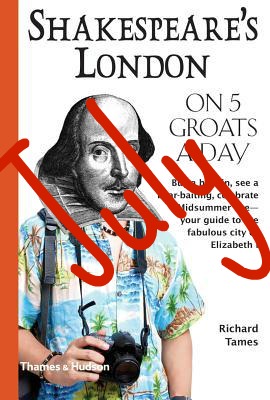
Shakespeare's London on 5 Groats a Day, Richard Tames


Re-reads:
Unseen Academicals, Terry Pratchett
No Impact Man, Colin Beavan


Books by women:
Aaaargh.


Goodreads challenge: 15 of 52 books in 2017


What are you reading?

05 July 2017

Feet's Desire

My first experience with the idea of desire lines was when I was in high school and the relevant authorities finally decided that it was time to build a sidewalk over the drainage ditch between the library and the school. In the local news article announcing the construction, the gent in charge said they chose the siting based on the worn spots in the grass. Good choice.

When presented with a space like this, I absolutely
will walk straight through the middle rather than around.
When you walk everywhere, following desire lines is
as much a matter of conservation of energy as it is
convenience. Source: sugoru.com.
Of course, since then in my professional life as an active transportation advocate, I've heard about desire lines many times, most notably at the 2014 Texas Trails and Active Transportation Conference, where Mikael Colville-Andersen spoke quite a bit about his work researching desire lines. Basically, if you've ever seen a straight line worn across a grassy area by people who'd rather not take the long way round via the officially designated route (i.e., the sidewalk), you've looked at a desire line. Wise municipalities keep an eye on desire lines and keep them in mind when it comes time for updating infrastructure. Senseless municipalities do things like putting up fences and otherwise trying to further inconvenience citizens who have rejected inconvenient design.

Of course, as has often been pointed out, sometimes the users are wrong. And sometimes so many desire lines pop up that it would be silly to officially legitimize all of them. Cities have to strike a balance--neither chasing after every desire line nor categorically ignoring them all is the correct answer.

One of the most interesting conclusions from Mr. Colville-Anderson's research is that when adequate and safe infrastructure is provided for people who ride bikes, then the actions that people on bikes take to keep ourselves alive and safely moving from point A to point B on infrastructure not designed for us--actions drivers frequently resent and complain loudly about, all while doing nothing to make people on bikes safer--those actions go away when infrastructure is adequate. When each road user had sufficient space and room to breathe without having to carve our own desire lines, positive interactions from all is the result.

I ran across a great statement in the book Shakespeare's London On 5 Groats a Day: "In England, roads are not made--they happen, whenever a sufficient number of people and horses tread out a track to wherever they wish to go." Many of these original desire lines across not only England, but also Europe, and indeed across the parts of the US where most roads predate automobiles, have been codified into the road system now. Desire lines are a life hack spread across entire cities, showing the real ways humans interact with their environment.

04 July 2017

What I Read: June

Maybe I've forgotten how to read. Or more to the point, maybe I've forgotten how to finish what I'm reading, being as I have eight books on my currently-reading shelf. (And a fine of unusual size waiting to be paid at the library, because every time I go out of town I forget to check my library due dates.)

I've noticed over the past few weeks some books that are missing off my shelves--two of them are ones in which I have contributor credit, and I'd really like to remember what I've done with them. One is a book that Chadwick had for a class, and there's a good chance he sold it long ago and I've not seen it for 10 years, but that didn't stop me for looking for it after something I heard reminded me of it last week. And I have an unaccounted-for gap on a shelf that has me wracking my brain trying to remember who I've loaned books to lately. And again, it's possible that gap has been there since I put my books on the shelves in the first place, and I already forgot. Who knows?

As always, all links and images are from Goodreads. Let's be friends and you can see all the things I've read.


First-time reads:
The Handmaid's Tale, Margaret Atwood


Re-reads:
Theodora and the Chalet School, Elinor M. Brent-Dyer
Trials for the Chalet School, Elinor M. Brent-Dyer


Books by women:
The Handmaid's Tale, Margaret Atwood
Theodora and the Chalet School, Elinor M. Brent-Dyer
Trials for the Chalet School, Elinor M. Brent-Dyer


Goodreads challenge: 14 of 52 books in 2017


What are you reading?

02 July 2017

Choosing This Task

Source: Goodreads..
This past week, the Bible study group I'm part of read a chapter from Uninvited about Hannah, Samuel's mother. (As in, 1st & 2nd Samuel. That Samuel.)

Here's the thing about Hannah, and also about many of the women in the Bible with whom I feel a particular affinity: she was infertile for quite a long time. Generally speaking, if we're told that a woman in the Bible has a closed womb, it's usually so we can see how God works to bring fertility where there was none. So Hannah's story has a different ending than mine does. But that doesn't prevent me from feeling this affinity, all the same, and especially for one particular reason-- her husband had another wife (Peninnah), who was quite fertile, and the Biblical account tells us that the other wife went out of her way to make Hannah miserable in her childless state.

When I was a kid growing up in church, I was told over and over again that Israelite women who couldn't have children were generally regarded as having displeased God in some way. Y'all, there are plenty of 21st-century Christians who obviously still believe this, and moreover, have appointed themselves as the deliverers of this dismal news to any childless women in their vicinity. I know y'all have heard this song and dance from me before, but that won't keep me from saying it once more for those in the back: do not be Peninnah. Do. Not. And there are a whole list of reasons why not, but the only one that's really needed is this: it is none of your business to police the childless folks around you. If you can't be around them and at the same time keep quiet about what they should be doing to increase their fertility or how they'll change their minds and it'll be too late or any other dopey thing that people say, then do them a favor and stop being around them. Harsh? Yes. But so is that behaviour, and there's no excuse for it. Just don't.

So I shared some of this experience with the group on Monday night, and they now know all of the interesting things there are to know about me (infertile, widowed, car-free--that's pretty much it), but my reason for sharing was this: Ms. TerKeurst wraps up the chapter with two sentences I wish I'd had in my arsenal for years. "She gets the assignment she was made to carry. I'm freed up for other better-suited assignments tailor-made for me." YES. This. This is what I've tried to hard to express for many years but could never find the words for.

This place is growing on me, so whatever God has in
store next, I hope it's at least in Cincinnati.
I don't know what assignment God has for me. It must be a doozy, if it requires no children and no husband. I don't even know where to start looking, except to be listening and watching and open to things that may come my way. And maybe today, the assignment that's tailor-made for me is to remind folks, again, that their words and attitudes matter. Following Jesus is a choice, it's one that has to be made daily, and it carries weight to choose to bear his name. And since I've chosen to carry the love of Jesus into my interactions with others, I cannot--I cannot--use my words to needlessly beat others down. My assignment is to lift them up and point to the One who always got it right where we get it wrong.

God knows I fail at this a thousand times per day. Maybe you do, too. Maybe we can go forward together, all doing the best we can at the tasks we were made to carry.

27 June 2017

Stretching


Image source: Goodreads.
I'm reading The Rise of the Creative Class, and apparently the creative class has excellent eyesight that can easily read such small print. I'd like to at least get to 40 before I require bifocals, but it seems my need for large-print books has already arrived.

Anyway. Early in the book, Mr. Florida quotes, "Creativity is favored by an intellect that has been enriched with diverse experiences and perspectives." Something that comes up a lot among those of us who dream of one day being published authors is travel--the idea that unless a writer travels a lot, it's harder to come up with things to write about.

It's certainly true that travel is enriching and a fast way to engage with people unlike one's self. But it's not the only way, of course. It's possible (for most of us) to have fresh experiences and meet people with different points of view without ever straying too far from where we live. It does takes effort and courage to push past one's own edges and venture out into the unknown, even if it's just a stroll into the next block or to say hello to the person I see at the coffee shop once a week but have never spoken to. Or to read a book that I might not enjoy by a writer I would normally avoid. (I do this at least twice a year. Sometimes I hate it. Sometimes I love it. I never know until I do it.)

This came up in my Facebook memories yesterday.
I agree with the sentiment, certainly, but
I think it might add "learn something"
or "see something" or just "go outside."
They all work together when it's time to create.
To invite creativity into one's life is to invite joy and fun and wonder. But it also invites in risk--what if I fail? What if this isn't really who I am? What if I hate it? And the adrenaline rush that comes with pushing the edges of who we are always might end in an unfun crash that leaves us sprawling on the floor eating chocolates and wondering why we ever thought this was a good idea in the first place.

But the rewards of getting it right after many failures, of a kind word from a stranger at just the right moment, of having that "ah-ha" of suddenly seeing the world--or my own neighborhood--with fresh eyes... those rewards are why we push ourselves and try again. Those rewards make the curiosity and the courage required to seek out experiences and perspectives unlike our own so worth it. And they top up that courage to go out and do it again and again and again.

And that's worth getting out of bed for every morning and setting out to see what a new day will bring. What are you experiencing this week?

20 June 2017

In the Weeds

I'm participating in a Bible study group this summer that's reading a book called Uninvited, by Lysa TerKeurst. Normally, this is so not my kind of book. Every couple of years I pick up whatever Christian book everyone is raving about, fiction or non-fiction, to almost inevitably put it back down unfinished. I just can't even with Christian literature, although I keep giving it a try to see if it's gotten better. (This is not an invitation to send me suggestions, by the way. You should only do that if you want to end up on my Highly Suspicious list.) 

Image source: Goodreads.
But, this is what the group is reading, and I don't hate it so far. In this week's chapter I ran across this bit which I (mostly) appreciated, as a person who grows things: "Time grows the seeds that are planted, watered, and fertilized. Plant beauty, grow beauty. Plant thorns, grow thorns."

That first sentence? I love it. She nailed it. She nailed it so hard I wish she'd pushed the metaphor on and reminded us that the planting and watering are work that require constant attention to make sure the beautiful things that were planted continue to grow and thrive. Because the truth is that you don't have to plant weeds for them to grow. They sneak in, very much uninvited. In fact, they don't even sneak--they push up through the ground with brazen confidence, unfurling their leaves and growing at a breakneck pace. Because the weeds are racing the gardener, trying to pollinate before she notices their presence and brings them to a speedy end. If you want to plant beauty in your life--a new skill, or a friendship, or an exercise program, or a tidy house, or whatever your thing is--you have to pull the weeds all the time that you're nurturing the thing you want to grow.

Grandma told me over the phone
that her weeds were waist-high.
I'm not sure whose waist she was
referring to, because it sure wasn't
mine or hers. This thing was as
tall as I was and left a giant hole
after I dug it up.
Of course, Ms. TerKeurst isn't wrong about the thorns. Anyone who wants a weedy or thorny life can have one practically for the asking. It's a lot less work. And, IMO, a lot less worth living. 

I dug some very real, non-metaphorical weeds out of my Grandma's flower beds last weekend. She doesn't grow flowers any longer, but she doesn't want weeds there, either. So all summer long she gets outside on nice days and digs up the weeds that have taken root, all the while muttering about how she just dug this one up by the roots last week. Now, Grandma has lived a long life filled with hard work, so I don't blame her for not wanting to go to the bother of flowers at this stage of the game, but she knows as well as I and Ms. TerKeurst do the truth about weeds--the best way to keep them out is to grow the thing you want instead.

What are you growing?

06 June 2017

False Starts

Today would normally be my "What I Read" post, but as I look at my Goodreads list I see that I finished not a single book in May. Good grief. I started a whole bunch, but finished? Nope. That 2017 Goodreads Challenge is not going so well.

Source: Goodreads.
So, here's one of the things I'm reading. I'm on my second try of Catch-22, and while it's hilarious, it's not hard to remember why I put it down the first time. It's a book that requires a lot of concentration and is only pretending to be a light read. I have a few other books out from the library that I'd also like to read, so maybe I'll end up taking this one back if I run out of time before I run out of book. I have no objections to picking it up a third time.

And this is hardly the first book that it's taken me a few false starts to get through. Les Misérables took two tries. Little Women took at least three. (Also, it's one of the free public domain books I loaded onto my mother's tablet a few months back, and on my last trip home she told me she was having trouble getting through it. There are a few parts of that book that are a serious slog for the 21st-century reader.) Lord of the Rings took a couple trips to my house before I finished it, although that was more due to all the things I had going on in my life right then that were crowding out my reading time. And even the entire Chronicles of Narnia series was a seven-year adventure of me not being ready for some of the later books even though I loved the early ones--I started them in the 5th grade and didn't finish until a couple months before high school graduation.

More recently, I took Wicked back to the library after my second attempt to read it through. Will I ever pick it up again? Maybe someday, if I'm in the right frame of mind.

I know there are folks who feel that once a book is started, they must finish it, even ones they aren't enjoying. I have too many books on my to-read list to be that person, but if you are one, please hear this: if you're struggling, if you're not enjoying that book, if there are other things you'd like to read right now--it's okay to put that book down. Stick a little bookmark in it and put it back on your shelf to give your brain a break. Write it down somewhere so you remember to go back to it and then take it back to your library. Loan it to a friend who might enjoy it more than you do. The book isn't going away, and it will always be ready for you when you're ready for it.

Those books I mentioned before? Little Women, Les Mis, LOTR, Narnia? They're all all my favourites list now. I've re-read every single one of them, some of them multiple times, and my relationship with those stories is none the worse for my having taken my time to befriend them in the first place. So if I do return Catch-22 still unread, it will be with no regrets and the knowledge that it will come to me again when I'm ready.

What's something you've had to put to one side to await a different season in your life?

23 May 2017

The Unadulterated Cat

Dawn sent me this book for my birthday, and I gotta tell you, it's the Pratchettiest Pratchett he ever Pratchetted.

I haven't finished it, but that's because I have so many things in the air at the moment I haven't finished anything in a while.


"A Real cat's aim is to get through life peacefully, with as little interference from human beings as possible. Very much like real humans, in fact."

02 May 2017

What I Read: April

I read three books again in April, which means my Goodreads Challenge is getting a bit ahead of me at the moment. Maybe now that I can stop dashing out my door a couple times a week to go take photos of places I've never seen before, I'll have a bit more time for reading. I hope.

So, here's what I got through in April. Books are in alphabetical order by title (ignoring articles, naturally; I'm not a barbarian). If you want to see them in a different order, let's be friends on Goodreads and you can peruse my shelves to your heart's delight. As always, book images and links are from Goodreads, and that's where you can read my reviews, too.


First-time reads:
Never Have Your Dog Stuffed: And Other Things I've Learned, Alan Alda
The Red Notebook, Antoine Laurain
Rich Christians in an Age of Hunger, Ronald J. Sider


Re-reads:


Books by women:


Goodreads challenge: 13 of 52 books in 2017


What are you reading?

14 April 2017

L is for Library #AtoZChallenge

Join me on the A to Z Challenge: I'll share a different thing from my new home, Cincinnati, every day for 26 days in April.

If I had to pick one thing I love more in Cincinnati than anywhere else on earth, this is it: the local library. And happiest of happenstances, this letter has come up during National Library Week.

I had thought I had read somewhere that the Cincinnati-Hamilton County Library has 42 branches, which obviously is the correct number for a library to have, but when I double-checked this morning I only saw 41 on the list. Bummer.

How do I love the Cincinnati Library? Let me count the ways:
  1. It's connected to the OhioLink system, which means I can borrow a book from any municipal or university library in Ohio (participating libraries, that is). 
  2. The librarians are incredible. I mean, all librarians are superheroes, but these are superheros who are able and willing to chat about everything. Seriously, there's nothing these folks don't know.
  3. The Main Library is the busiest library branch in North America.
  4. ... and The Public, a movie that deals with (among other things) homelessness and mental illness, just finished filming there a couple months ago. I may even go see that one in the theater.
  5. Books auto-renew on the first due date.
  6. Their social media team is first-rate. Want to follow some amazing bookish folks? Find them on Twitter, Pinterest, Facebook, and Instagram. Especially their Pinterest. Holy smokes, that Pinterest page. Don't miss it.
The Main Library downtown:
It's not a great pic on the lower right (the library, and thus
this garden, was already closed for the day when I arrived),
but that's one of the local pig statues, pulling a cart of books.
It is a magnificent place, and among its many wonders is a delightful Friends of the Library store. The New York Public Library gift shop may have gotten more of my awe, but the Cincinnati Library shop is much dearer to my heart.

My own branch library:

is the Corryville branch, which just celebrated its 100th birthday earlier this month. It's a Carnegie Library, just like the original library in my hometown, but unlike that one it's still in active use as a library. I love it so very much, for all that I tend to swoop in, drop off read books, pick up on-hold books, and race out again.

Also at the Corryville library, there's this:
Some of the many, many "Libraries are for all" signs in
bunches of languages all around the library.
 and this:

and I definitely wasn't moved to tears at the sight of either of those things when I saw them at my library. Nope. Definitely not me. Must have been some other person who cries over every freaking thing. (Obviously, me being moved to tears would be a bigger deal if it didn't happen approximately 4158 times per day.)

Come visit me. We'll go to the library. (Yes, I may take you other places after you've seen all the book places in town, but only if you're appropriately enthusiastic about all the books.)